
Before You Turn on the Heat, Is Your Home Ready for It?
Before You Turn on the Heat, Is Your Home Ready for It?
Alarms, gas equipment, and air and water filters to check in November
As the weather gets cooler, life at home changes. We close the windows, turn on heaters that have been idle for a while, and spend more time making warm meals.
But before adjusting the thermostat, there are a few things worth checking. Are the alarms in the hallway working properly? When was the heating equipment last inspected? Do you remember when you changed the air purifier and water purifier filters?
The quieter a piece of equipment is as it does its job, the easier it is to miss its maintenance schedule. This November, instead of buying new safety products, why not start by checking the equipment you already have at home?
1. It matters more that alarms work than that they’re installed
First, locate the smoke alarms and carbon monoxide alarms in your home. These two devices detect different hazards.
Smoke alarms detect smoke from fires, while carbon monoxide alarms detect CO. Some products combine both functions, but not all alarms do. Before judging by appearance, check what the product label says it detects.
The U.S. Fire Administration recommends installing smoke alarms inside each bedroom, outside separate sleeping areas, and on every level of the home, including the basement. As a general rule, carbon monoxide alarms should be installed on every level and outside separate sleeping areas. Always follow the product manual and local regulations for specific placement.
When checking your alarms, look at these three things:
- Test button: Check that the alarm works according to the instructions, and make it part of a monthly testing routine.
- Power and batteries: Check whether the batteries are replaceable or sealed. For alarms with sealed batteries, don’t try to replace the batteries yourself; follow the product instructions.
- When to replace the device: Replacing the batteries and replacing the alarm itself are separate things. Smoke alarms should generally be replaced 10 years after the date of manufacture. For CO alarms, check the replacement date and end-of-life signals indicated for that product.
Keeping the manufacture date, installation date, and scheduled device replacement date separate makes it much easier to stay on top of maintenance than recording only the purchase date.
2. A gas smell and carbon monoxide are different warning signs
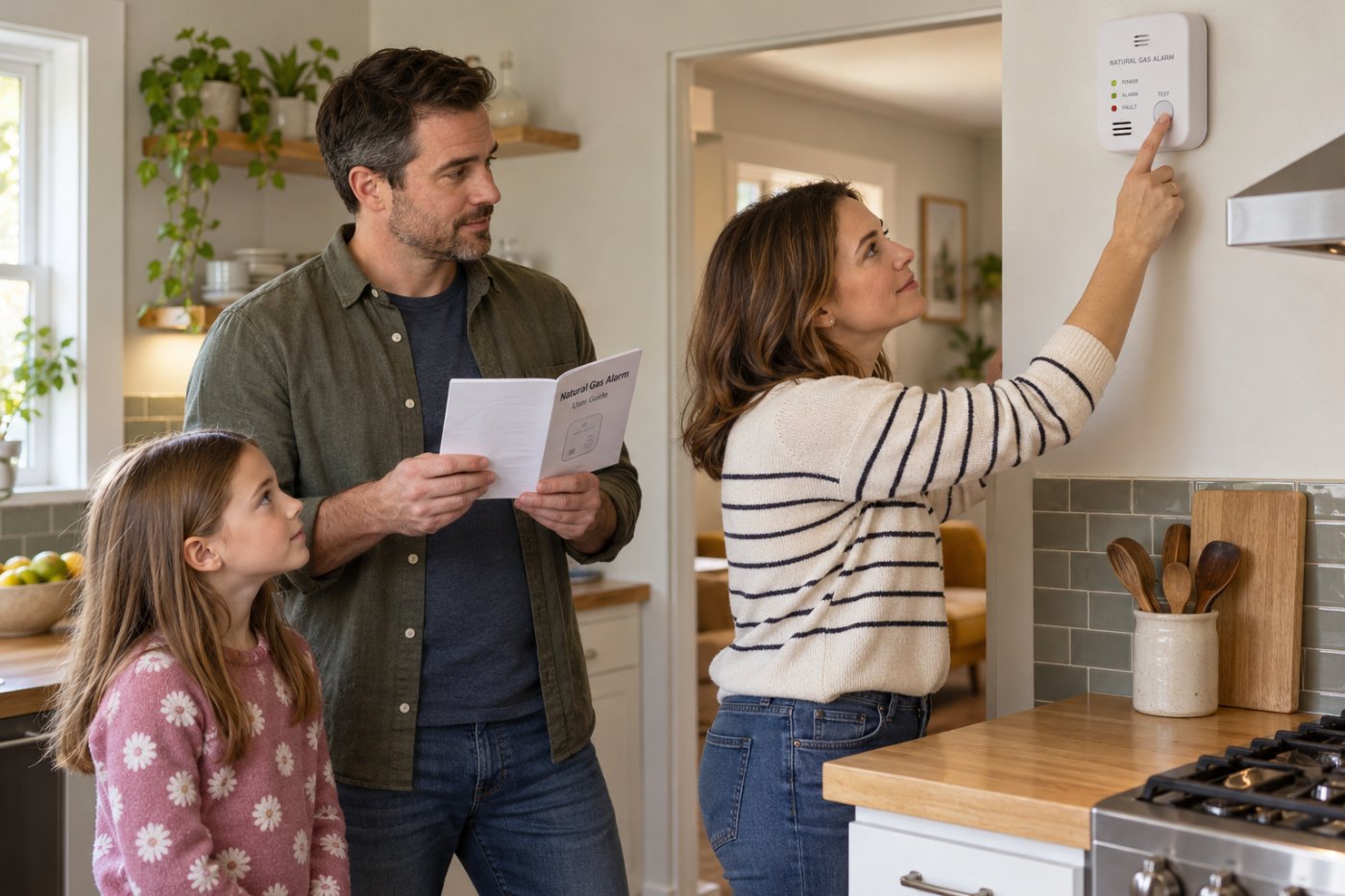
If your home has a gas stove or gas heater, it’s important not to confuse a gas leak detector with a carbon monoxide alarm.
Natural gas and propane detectors detect leaks of those fuels. CO alarms detect carbon monoxide, which can be produced when fuel burns. Unless a product specifically says it supports both functions, don’t assume one can do the job of the other.
Carbon monoxide has no color or smell. That means not smelling gas does not mean there is no risk of CO. The installation, venting, and maintenance of fuel-burning equipment such as heaters and fireplaces are important. The CPSC recommends having fuel-burning heating equipment professionally inspected every year.
This month, check the date of your heating system’s last professional inspection, and schedule the next one if it’s due. Rather than taking apart or attempting to repair gas connections or pipes yourself, it’s best to leave the work to a qualified professional.
If you suspect a gas leak, leave first—don’t stop to inspect. Don’t turn lights or electrical devices on or off, and don’t use a phone indoors. Leave immediately. Once you’re in a safe place, contact your gas utility, and call 911 if there’s an immediate danger. Don’t stay behind to try to stop or repair the leak yourself.
If a CO alarm sounds, don’t stay inside trying to figure out the cause. Go outside to fresh air immediately and call 911. Don’t go back inside until emergency responders say it’s safe.
3. An air purifier filter can’t remove every hazard
It’s easy to assume that if the air purifier is on, all the air in the home is being taken care of. But different devices do different things.
Particle filters such as HEPA and gas-adsorbing filters such as activated carbon have different roles. An air purifier doesn’t replace a CO alarm or gas leak detector, and it shouldn’t be considered a solution for radon either. The EPA advises against relying on ordinary air purifiers to reduce radon risk.
For filter maintenance, rather than applying a blanket schedule like “replace every six months” to every product, it’s best to follow the product manual and actual conditions of use.
Check filters in your HVAC system—the central heating and cooling system—and any separate ventilation units, as well as your air purifier. Recording the replacement filter’s model and specifications along with the last replacement date can save you the trouble of looking for the part later. Be sure to distinguish between washable filters and filters that need to be replaced.
If you’re concerned about radon, don’t rely only on readings from a general indoor air quality monitor. You’ll need a dedicated device or test kit that supports radon measurement. The EPA explains that testing is needed to find out whether radon levels in a home are high.
4. With water filters, first check what they’re designed to remove
Water purifiers, refrigerator water filters, faucet filters, and shower filters don’t all work the same way.
Different filters can reduce different substances, so having a filter doesn’t mean that all contaminants or microorganisms are removed. First, identify the problem you’re trying to address at home and check whether the product is designed to meet that need.
The same goes for replacement schedules. Rather than applying blanket rules like “shower filters must be replaced every month” or “all water filters last six months,” check the manufacturer’s recommended service life and capacity. The CDC also recommends maintaining and replacing water filters according to the manufacturer’s instructions.
Keeping the compatible filter number, installation date, and replacement criteria alongside the product name makes future maintenance easier.
5. Turn your safety equipment list into a next step
A list that only names your equipment tells you what you have. Add its location, condition, and next inspection date, and you’ll also be able to see what needs to be done.
For example, this record is more useful than simply writing “1 CO alarm”:
CO alarm in the hallway outside the second-floor bedrooms Photo of installation location / manufacturer and model / device replacement date / last test date / next test date / manual
The records you need will vary a little by device.
| Equipment | What to check first | What to record |
|---|---|---|
| Smoke and CO alarms | Detection function, location, test operation, device life | Location photo, model, manufacture and installation dates, last test date |
| Gas leak detector | Type of gas detected, installation and inspection according to the manual | Model, type of gas detected, inspection and replacement criteria |
| Heating equipment | Professional inspection history and next inspection date | Inspection date, company, maintenance details |
| Air and ventilation filters | Specifications, whether washable, replacement criteria | Part number, last replacement date |
| Water filters | What they remove and product performance, service life and capacity | Compatible filter number, installation date, next replacement criteria |
This also connects with HOGY’s approach to home management. Rather than trying to remember each item separately, connect where it is, what condition it’s in, and what needs to happen next.
Keep up with home safety checks with HOGY
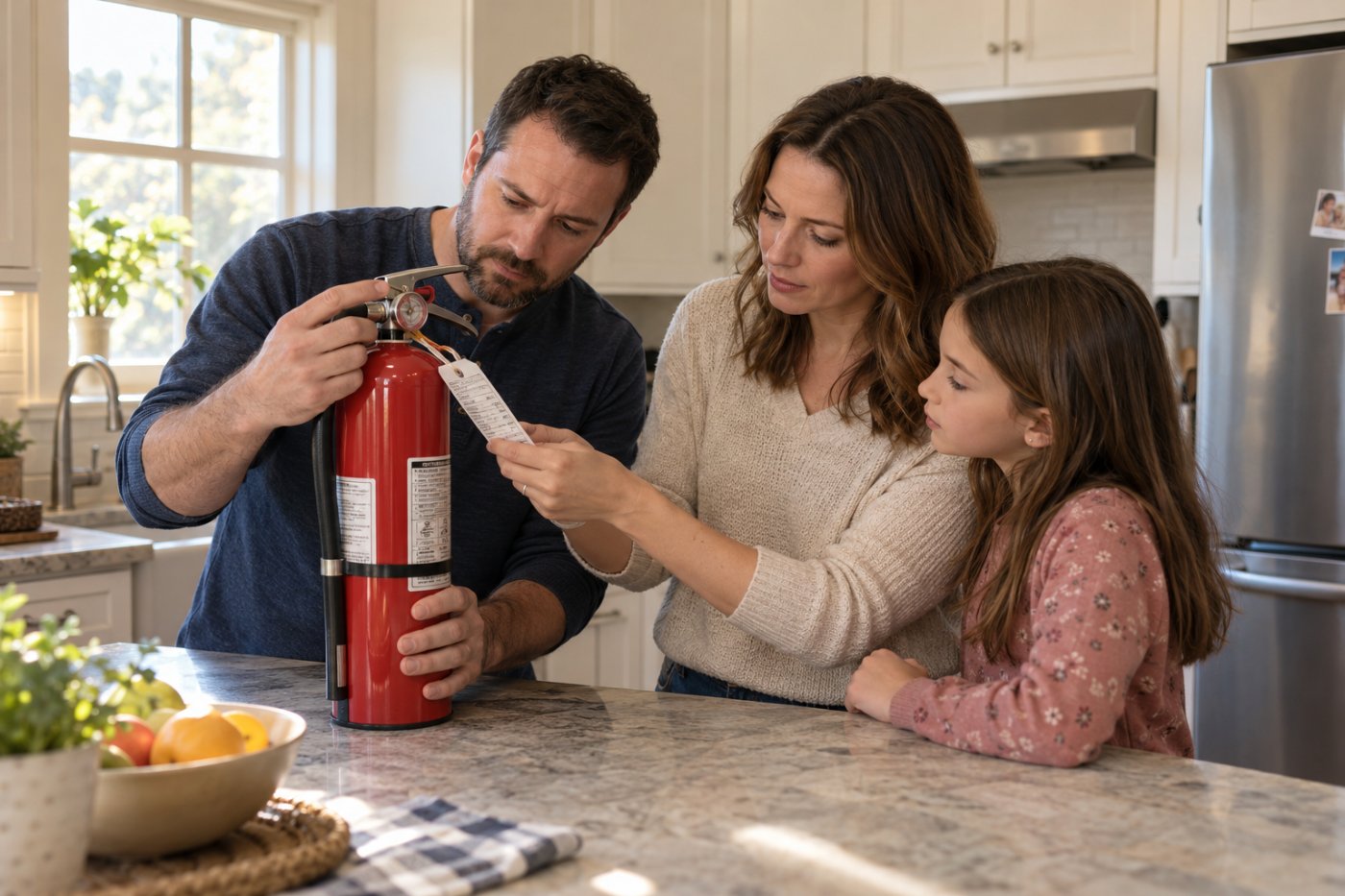
When was the fire extinguisher last checked? Where is the gas safety equipment? What needs to be checked next? There’s a lot to keep track of, and it can be hard to rely on family members’ memories alone.

With the safety management feature in the HOGY app, you can organize and record your recurring monthly home safety checks in one place. From fire extinguishers to gas safety equipment, record installation and storage locations and inspection history, and maintain each product according to its manual.
When you keep items to check each month separate from items that need to be replaced based on the product, you can refer back to your previous records at the next inspection. From having safety equipment on hand to building a habit of maintaining it, make it part of your routine with HOGY.
This weekend, start by checking one alarm
Trying to inspect the whole house at once can make it hard to get started. This weekend, check the locations of your alarms with your family and start by pressing the test button according to the instructions.
Next week, you can look for the heating inspection records, then check the filter replacement dates after that.
Home safety doesn’t end with a purchase. It means checking that the equipment you already have can do its job and following through with the next inspection. This November, let’s go one step beyond asking, “What do we have at home?” and check together: “Are we ready right now?”
---
*This article is written with U.S. households in mind. Follow product manuals and local regulations for equipment installation, inspection, and replacement.*
References
- U.S. Fire Administration — Smoke Alarms
- U.S. Consumer Product Safety Commission — Carbon Monoxide Fact Sheet
- SoCalGas — Natural Gas Leaks
- U.S. Environmental Protection Agency — Air Cleaners and Air Filters in the Home
- U.S. Environmental Protection Agency — Radon in Homes, Schools and Buildings
- U.S. Centers for Disease Control and Prevention — About Choosing Home Water Filters